



| Home > Living in China > Art |
Early imperial China (221 BC–AD 220)
 print
print  email
email  Favorite
  Transtlate
 Qin sculpture


The Terracotta Army, inside the Mausoleum of the First Qin Emperor, consists of more than 7,000 life-size tomb terra-cotta figures of warriors and horses buried with the self-proclaimed first Emperor of Qin (Qin Shi Huang) in 210?A class=ilnk onclick="assignParam('navinfo','method|4'+getLinkTextForCookie(this));" href="http://www.answers.com/topic/209-bc" target=_top>209 BC.
The figures were painted before being placed into the vault. The original colors were visible when the pieces were first unearthed. However, exposure to air caused the pigments to fade, so today the unearthed figures appear terra-cotta in color.
The figures are in several poses including standing infantry and kneeling archers, as well as charioteers with horses. Each figure's head appears to be unique, showing a variety of facial features and expressions as well as hair styles.
Pottery
Porcelain is made from a hard paste comprised of the clay kaolin and a feldspar called petuntse, which cements the vessel and seals any pores. China has become synonymous with high-quality porcelain. Most china comes from the city of Jingdezhen in China's Jiangxi province.
Jingdezhen, under a variety of names, has been central to porcelain production in China since at least the early Han Dynasty.
The most noticeable difference between porcelain and the other pottery clays is that it "wets" very quickly (that is, added water has a noticeably greater effect on the plasticity for porcelain than other clays), and that it tends to continue to "move" longer than other clays, requiring experience in handling to attain optimum results.
During medieval times in Europe, porcelain was very expensive and in high demand for its beauty.
TLV mirrors also date from the Han dynasty.
Han poetry
During the Han Dynasty (206 BC–AD 220), the Chu lyrics evolved into the fu (?, a poem usually in rhymed verse except for introductory and concluding passages that are in prose, often in the form of questions and answers.
From the Han Dynasty onwards, a process similar to the origins of the Shi Jing produced the yue fu poems.
Other Han art
The Han Dynasty was also known for jade burial suits.
Art
 more
moreClassic Chinese Handicraft:
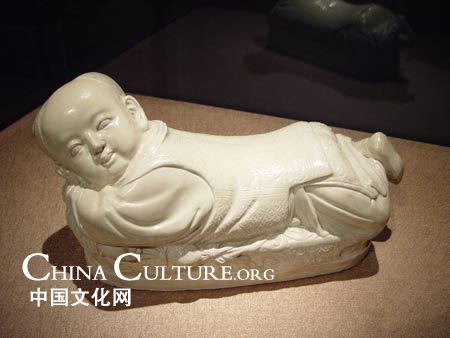
Porcelain pillows, as classic Chinese handicraft,
Chinese Treasures Returned from
As witness of Chinese culture and custom, countless treasures
The lost legacy: classical music
Accompany by the long history of China, Chinese classical music
Customs
more
Chinese Kungfu
Kungfu Taste: Learn Martial Art in Shaolin Temple
The mention of Shaolin Temple conjures up images of a quiet and
Keet Kune Do will reappears on screen: BRUCE Lee and
The Legend of Bruce Lee is shot by China Central Television
The Road to the Olympic Games for Wushu
Wushu, also called kungfu, martial arts, is attracting more and more
 |
 |
 |
 |