



Learning to Grow as a Student in China
The word “student” in Chinese, xuéshēng, is comprised of two characters: Xué, to study or learn; and Shēng, meaning raw, to live or grow. Someone who is a xuéshēng is literally a person who is learning to live and grow. Studying abroad in China is a chance to step outside comfort zones and learn about a completely new culture that, in many ways, varies drastically from other countries’ cul...
People Are People: 5 Practices You’ll See in China
Have you heard of the Big Five? In cross-cultural psychology, the Big Five refers to personality traits that are shared across cultures. The Big Five are: openness, extroversion, conscientiousness, neuroticism, and agreeableness. However, each is somewhat controversial. So, here’s a different take, five practices (rather than traits) that can be found no matter where you go or who you meet in C...
Posthumous marriage in Shanxi province
The thriller features a "ghost wedding" happened early last century. [Photo/Mtime] A family in north China's Shanxi province has held a so called "ghost wedding" for their son who died unmarried three years ago. Posthumous marriage is an ancient and popular custom in rural Shanxi, where the practice is often dictated by tradition, and many locals consult fortune tellers who say the family wi...
Confucius institute in Botswana starts 5th anniversary celebrations
Confucius Institute at the University of Botswana (CIUB) on Monday started its 5th anniversary celebrations with cultural programs. The institute, named after ancient Chinese philosopher Confucius, serve as non-profit public institutions to help foreigners better understand China through language teaching and culture introduction in universities overseas. The first such institute was establish...
Shadow Puppet Play
The shadow puppet play, also called "shadow play", is a drama form in which the player holds the human figures that are engraved by the animal hides with colored paintings, and reflected on the curtain through the light, singing and dancing controlled by the player with the silk string, gongs and drums music, playing a series of stories. It is widely spread in most regions in China, except Tibet...
Moon festival in full swing at UNESCO heritage site
Although Pingyao, a city dating back some 2,700 years in northern China's Shanxi Province, has become increasingly modernized, residents stick to their Moon Festival traditions. In a traditional courtyard in the north of the city -- a UNESCO cultural heritage site since 1997 -- Luo Aiqing is making cakes for her family and customers. It takes only a few seconds for the 88-year-old to shape the...
Tourists get a taste of 'grabbing marriage'
China is a country with 55 ethnic groups, and each group has its own unique marriage customs. There's even one called 'grabbing marriage', among some people of the Miao ethnic group. Recently, dozens of couples got the chance to experience this unique tradition in southwest China's Guizhou Province. Let's find out more. 'Grabbing marriage' is a symbolic move to show a couple's decision to get m...
Wudang Taichi – highlight of Sino-France RV Tour in China
The departure ceremony of the Sino-France RV Tour in China kicked off in Shanghai last Friday. The event is hosted by the trade development and cooperation center of the China Council for the Promotion of International Trade (CCPIT) at the intersection of the 50th anniversary of Sino-France ties and the third session of a French RV tour in Eurasia. The team of recreational vehicles was expected...
8 Meaningful Gifts for Your Kids
Celebrated on Sunday, June 1, Children's Day is a festival for children all over the world. It is a time to have fun and give something special to the small people in your life. Here are some gift ideas for Children's Day.1.An educational toyChildren are born with an innate desire to learn, so choosing educational toys that encourage learning is a great way to assist a child with their developme...
Dragon Boat Festival
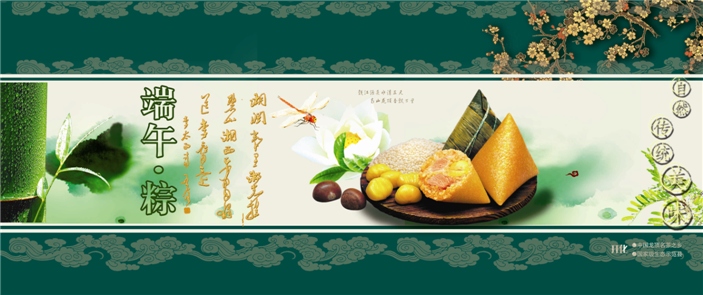
Zongzi for Dragon Boat Festival A woman selects leaves used to make Zongzi, a pyramid-shaped dumpling made of glutinous rice wrapped in bamboo or reed leaves, at a market in Sizhou township of Shangrao, east China's Jiangxi province, May 25, 2014. Chinese have the tradition to eat Zongzi to greet the Dragon Boat Festival, which falls on June 2 this year. dragon boat rowing race Villagers ...
- Home
- Survey of China
- Places of interest
- Martial Arts
- Chinese Medicine
- Diet
- Art
- History of China
- Custom
Art
 more
moreChina Beijing International Diet ...
Recently, The hit CCTV documentary, A Bite of China, shown at 10:40 ...
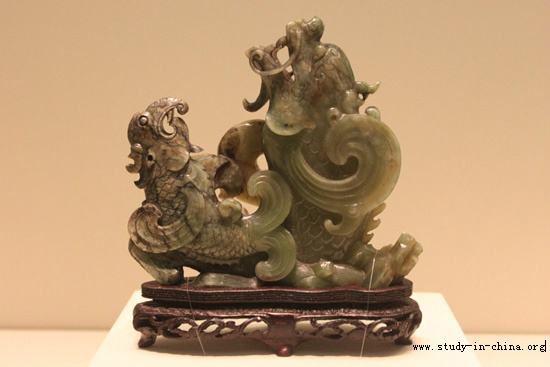
Exhibition of Ancient Chinese Jad...
At least 8,000 years ago, Chinese ancestors discovered a beautiful...
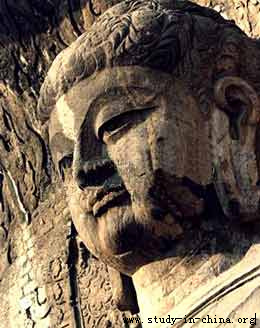
Longmen Grottoes
The Longmen Grottoes, located near Luoyang, Henan Province, are a tr...
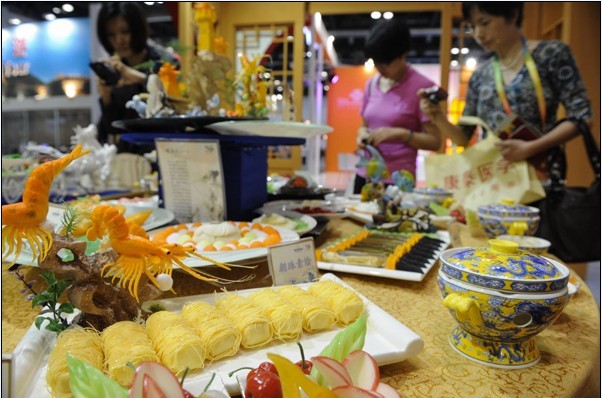
The 13th China Shanghai Internati...
On the evening in Shanghai, lights glittering warmly in front of n...

Custom
more
Provinces Site
Chinese Medicine
moreMartial Arts
Chinese martial arts practitioner pens 400 guide...
A Chinese martial arts practitioner in northern China's Hebei provin...
Tai Chi Master Class Held in Moscow
MOSCOW, June 15, 2016 (Xinhua) -- Students learn from Shaolin ...
Celebriting 70 years' efforts in restoring Mogao...
Work is being carried out at the restoration site of cave No 98 a...
Chinese Food Culture
Pai huang gua (smashed cucumbers)
In a report titled Smashed cucumber salad takes Manhattan, The New Y...
Jian bing (grilled savory crepe)
Jian bing, a form of grilled savory crepe with stuffing, is a popula...
General Tao's Chicken
Though name of the dish comes from general Zuo Zongtang (1812-1885...